
Japanese Name Generator: Discover Authentic Names Rooted in Language, Culture, and Tradition
Names are rarely simple. In most cultures, a name is the first story a person carries a compressed narrative of family lineage, seasonal timing, cultural aspiration, and sometimes sheer poetic instinct. Nowhere is this more true than in Japan, where the act of naming a child is treated as one of the most consequential decisions a parent will make. Every character chosen, every sound selected, every meaning layered into those two or three kanji carries weight that extends from the moment of birth through every professional introduction, every official document, and every whispered farewell. This is why a well-designed Japanese name generator is so much more than a randomizer it is a window into one of the world’s most intentional naming traditions, useful for writers building fictional characters, game designers populating entire worlds, students exploring Japanese culture), and anyone who has ever wondered what their name might sound like reshaped by one of history’s most refined linguistic traditions. In this guide, we explore every dimension of Japanese naming: its history, its structure, its sounds, its meanings, and how to use a Japanese name generator to produce names that feel genuinely authentic rather than decorative approximations.
1. The Deep History of Japanese Names: From Ancient Clans to Modern Families
The history of Japanese naming stretches back more than two thousand years and reflects the full arc of the country’s social, political, and cultural evolution. In ancient Japan, during the Yayoi and Kofun periods, names were primarily functional tied to clan identity, occupation, and geographic origin.
The great aristocratic clans of early Japan, such as the Fujiwara and Minamoto, used names that carried explicit political significance, marking bloodlines that determined access to power and land. These early names drew heavily on Chinese characters imported via Korea, and the influence of Chinese kanji on the Japanese naming system has been profound and enduring, shaping the visual and semantic character of Japanese names right up to the present day.
During the Heian period roughly the ninth to twelfth centuries naming became an art form among the aristocracy. Court nobles gave their children names of extraordinary literary elegance, drawing on classical poetry, seasonal imagery, and Buddhist philosophical concepts. Women
of the Heian court are often known to history only by descriptive titles rather than true names, because their personal names were considered too intimate and precious to be spoken aloud in public. This tradition of treating names as deeply personal and almost sacred persists in subtle forms in modern Japanese culture, where the act of addressing someone by their given name carries a degree of intimacy that would surprise many Westerners. A quality Japanese name generator draws on this deep historical well, offering names that feel grounded in genuine tradition rather than invented from nothing. Just as a Star Wars Name Generator builds names within the specific phonetic rules of its fictional universe, the Japanese naming system operates within a rich framework of linguistic and cultural rules that give every authentic name its distinctive character.
The Meiji Restoration of 1868 brought sweeping changes to Japanese naming conventions. For the first time, the government required all citizens not just the samurai class and aristocracy to adopt fixed family names. Before this reform, commoners in Japan often went by a single given name or an informal occupational designation. The sudden adoption of family names by millions of ordinary people produced an explosion of creative naming, with families choosing surnames that referenced their villages, local geography, occupations, and natural surroundings. This is why the modern Japanese surname landscape is remarkably diverse, with tens of thousands of distinct family names far more than in most other countries many of them achingly beautiful in their imagery: Tanaka means ‘middle of the rice field’; Yamaguchi means ‘mountain entrance’; Fujimoto means ‘base of the wisteria.’ These surnames carry the landscape of rural Japan in their characters, and understanding this history makes every name generated by a Japanese name generator more meaningful.
2. How Japanese Names Are Structured: Family Names, Given Names, and the Kanji System
Understanding the structural logic of Japanese names is essential for anyone who wants to use a Japanese name generator effectively. Japanese names follow a surname-first order in Japan itself the family name precedes the given name, reflecting the cultural priority of group identity over individual identity. So in the name Yamamoto Haruki), Yamamoto is the family name and Haruki is the given name). This ordering is often reversed in Western contexts as a concession to different naming conventions, but purists and traditionalists maintain the Japanese order as a matter of cultural respect.
The visual foundation of Japanese names is the kanji writing system Chinese-derived characters, each carrying one or more meanings and multiple possible readings. A single kanji character might be read several different ways depending on context, and the readings used in names called nanori sometimes differ from the standard readings of the same characters in ordinary text. This creates a situation unique to Japanese: two people with visually identical names written in kanji might pronounce them completely differently, and two people with the same pronunciation of their names might write them with entirely different characters carrying entirely different meanings. This complexity is part of what makes Japanese naming so rich and so challenging for automated tools. A truly sophisticated Japanese name generator must navigate not just the sounds of names but the meanings of the characters used to write them.
Japanese names can be written in three scripts: kanji (the primary system for most names), hiragana (the phonetic syllabary sometimes used for given names, especially feminine ones, for a softer appearance), and katakana (the angular phonetic syllabary typically reserved for foreign loanwords and foreign names, but occasionally used for Japanese names in specific stylistic contexts). Each script creates a different visual and emotional impression: kanji names look formal and meaning-rich; hiragana names look gentle and traditional; katakana names look modern and sharp. When using a Japanese name generator), paying attention to which script a generated name uses and what emotional impression each script creates is part of using the tool with genuine cultural awareness.
3. The Meaning Behind Japanese Names: Kanji Choices and Semantic Depth
One of the most distinctive features of the Japanese naming tradition is the degree to which name meanings are consciously and carefully chosen. When Japanese parents select a name for a child, they are typically choosing not just a sound but a set of characters whose meanings reflect their wishes for the child’s future. This practice called ateji in its more casual form, though the term has broader linguistic meanings gives Japanese names a semantic depth that most Western naming traditions lack. The same spoken name might be written with many different combinations of kanji, each combination creating a subtly or dramatically different meaning, and parents often agonize over these choices for months before a child is born.
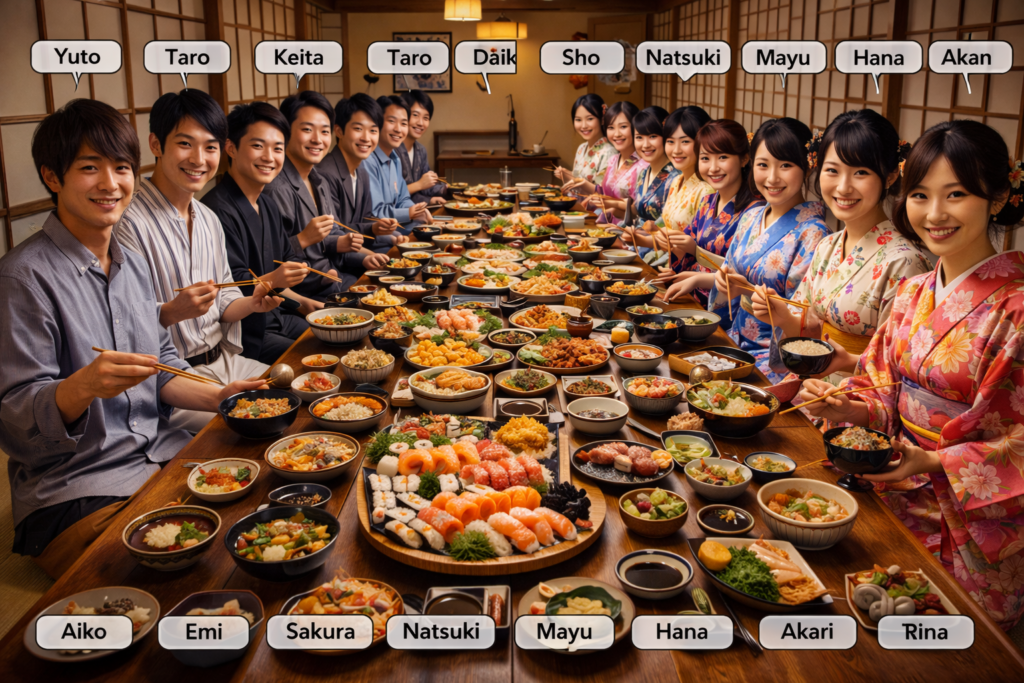
Consider the name Haruki), which can be written with kanji meaning ‘spring radiance,’ ‘radiant sunlight,’ ‘clear spring,’ or ‘blooming tree,’ among other combinations. The novelist Haruki Murakami’s name uses characters meaning ‘spring’ and ‘tree,’ carrying a quiet natural imagery that feels entirely consistent with the contemplative quality of his prose. Or consider Yuki), which might mean ‘snow,’ ‘happiness,’ ‘courage,’ or ‘gentle hope’ depending on the characters chosen the same beautiful sound carrying radically different aspirational freight. This is why a Japanese name generator that provides kanji meanings alongside phonetic transcriptions is significantly more useful for writers and researchers than one that generates sounds alone. Just as a Planet Name Generator must consider what a world’s name implies about its character, a Japanese name generator must consider what a name’s kanji implies about the person who carries it.
Common kanji used in Japanese given names cluster around a set of recurring thematic categories. Nature imagery is pervasive: hana (flower), tsuki (moon), yama (mountain), umi (sea), hoshi (star), kaze (wind). Virtue concepts appear frequently: makoto (sincerity), shin (truth), ren (lotus/love), yuki (courage). Temporal and seasonal references are common: haru (spring), natsuki (summer hope), akira (bright/autumn). These thematic clusters are not arbitrary they reflect deep cultural values about what qualities are worth aspiring to, what natural phenomena carry spiritual significance, and how the rhythm of seasons maps onto the rhythm of human life. Understanding these clusters helps any creator use a Japanese name generator with genuine intentionality rather than simply accepting the first output produced.
A Japanese name is not just a label it is a small poem written in characters, a compressed wish for the life that follows.
4. Traditional and Modern Japanese Male Names: Patterns, Sounds, and Meanings
Japanese masculine given names have evolved significantly over the centuries, moving from the elaborate multi-character names of the Heian aristocracy through the terse, martial names of the samurai era to the more varied and often nature-inflected names of the modern period. Understanding these patterns helps writers choose appropriate names for characters set in different historical periods, and it helps anyone using a Japanese name generator assess whether an output feels historically and culturally plausible for the character they are building.
Traditional masculine names often end in suffixes that signal gender clearly: -ro or -rou (meaning ‘son’ or ‘youth’), -ki (meaning ‘radiance’ or ‘tree’), -to (meaning ‘person’ or ‘east’), -hiko (meaning ‘young man’ or ‘prince’), and -suke (meaning ‘help’ or ‘assistance’). Names ending in these suffixes Ichiro, Jiro, Saburo, meaning ‘first son,’ ‘second son,’ ‘third son’ were historically used to indicate birth order among sons and remain recognizable today as classically Japanese constructions. Samurai-era names often combined martial imagery with these suffixes: Musashi, Nobunaga, Katsuyori names that sound strong and decisive, carrying the weight of a warrior culture that valued directness and readiness.
Modern Japanese masculine names show considerable diversity. Some parents choose names with a very traditional character: Kenji (health and two), Hiroshi (generous), Takeshi (warrior/fierce). Others prefer names that feel more contemporary or gentle: Ren (lotus), Sota (big/thick sky), Haruto (sunlight/fly). There is also a modern trend toward shorter, crisper names that are easier to pronounce internationally, reflecting Japan’s increasingly global cultural orientation. A good Japanese name generator should offer options across this spectrum from deeply classical masculine names that would suit a period drama set in the Edo era, to contemporary names that feel natural for a character in a twenty-first-century Tokyo setting.

5. Traditional and Modern Japanese Female Names: Beauty, Nature, and Evolving Identity
Japanese feminine names have their own distinctive character one that has shifted considerably across different historical periods and that continues to evolve as Japanese society reexamines traditional gender roles. Historically, feminine names in Japan often drew more heavily on nature imagery and aesthetic concepts than masculine names, reflecting the cultural association of femininity with beauty, grace, and seasonal sensitivity that pervades classical Japanese literature and art. This is not to say that masculine names lack beauty many are exquisite but there is a particular quality to classical feminine Japanese names that feels deeply connected to the natural world.
Common endings in traditional feminine names include -ko (meaning ‘child,’ the most historically common feminine suffix Yuko, Keiko, Naoko, Sachiko), -mi (meaning ‘beauty’ or ‘sea’ Nozomi, Harumi, Kasumi), -ka (meaning ‘flower’ or ‘fragrance’ Hanaka, Ayaka, Mika), and -na (a soft ending associated with gentleness Hana, Mana, Kana). The suffix -ko was so dominant throughout the twentieth century that it became almost synonymous with Japanese femininity then fell somewhat out of fashion among younger parents in the 1990s and 2000s, who began choosing names without the suffix for a more modern feel. This generational shift is itself a cultural story worth knowing when using a Japanese name generator) for fiction: a character named Yoshiko is probably older than a character named Yoshi or Yoshi-chan.
Some of the most enduringly beautiful Japanese feminine names include Sakura (cherry blossom), Yuki (snow or happiness), Aoi (hollyhock or blue), Natsuki (summer hope), Misaki (beautiful blossom), and Himari (sunflower). These names carry the imagery of Japan’s celebrated relationship with the natural world the mono no aware aesthetic, the appreciation of transience and beauty found in fallen petals and early snow. For writers, these names do double narrative duty: they identify a character and simultaneously say something about the cultural world that character inhabits. Other creative tools like a Horse Name Generator work on similar principles the best names evoke the qualities and spirit of the thing being named, not just a neutral label.
6. Japanese Family Names: Geography, Nature, and the Poetry of Place
Japanese surnames family names are among the most geographically and naturally evocative in the world. Because most Japanese family names were adopted relatively recently (following the Meiji-era surname mandate), they tend to reference the immediate landscape, geography, or environmental features of the places where families lived. This gives the Japanese surname landscape an almost poetic quality: when you know a Japanese family name, you often know something about the land its bearers came from.
The most common Japanese surnames are immediately recognizable even to non-Japanese speakers because of their clean imagery. Sato (meaning ‘village’ or ‘helpful person’), Suzuki (small bell tree a type of wisteria), Takahashi (high bridge), Tanaka (middle of the rice field), Watanabe (crossing by ferry). These surnames picture specific moments in Japanese rural life the ferry crossing at dusk, the bridge visible from the village, the rice fields extending to the treeline. Less common but equally beautiful surnames include Fujiwara (wisteria plain), Hasegawa (long valley river), Nakamura (middle village), and Miyamoto (base of the shrine) each one a compressed landscape painting in two characters.
When using a Japanese name generator for fiction writing or game design, the pairing of surname and given name is where the real creative art lies. A surname that evokes a specific landscape quality can harmonize or productively contrast with a given name that carries a different kind of imagery creating a full name that suggests something about a character’s relationship to their heritage. A character named Fujiwara Kurai (wisteria plain dark) carries a built-in tension between the beauty of their family name and the shadow in their given name. A character named Tanaka Haruki (middle of the rice field spring radiance) suggests someone rooted in ordinary life but possessed of unusual brightness. The Japanese name generator gives you the raw materials; the pairing is the creative choice.
7. Japanese Names in Anime, Manga, and Fictional Storytelling
For many people outside Japan, the first encounter with Japanese names comes through anime, manga, and other forms of Japanese popular culture and this context creates both opportunities and risks for anyone using a Japanese name generator) to build fictional characters. Anime and manga have their own naming conventions that sometimes follow traditional Japanese patterns closely and sometimes deviate from them deliberately for dramatic, comic, or characterization purposes. Understanding the difference matters for writers who want their characters to feel authentically Japanese rather than anime-adjacent.
Anime characters often carry names that are semantically transparent names where the meaning in kanji is immediately relevant to the character’s personality, power, or narrative role. A protagonist whose name contains kanji for ‘light’ or ‘hero’ is telegraphing something about their story arc. A villain whose name contains characters associated with darkness, emptiness, or destruction is doing the same. This is a tradition with roots in classical Japanese literature where character names in The Tale of Genji, for instance, are almost all poetic epithets rather than personal names but anime has developed it into a distinct art form. Shonen manga in particular has elevated the semantically charged character name into an institution: think of names like Izuku Midoriya (green valley connecting to the character’s green-themed powers) or Naruto Uzumaki (maelstrom/spiral embedded in both name and design).
For fiction writers building Japanese characters, the lesson is to be intentional about name meanings rather than treating them as decoration. A Japanese name generator that provides kanji meaning breakdowns alongside phonetic outputs gives writers the tools to make these intentional choices selecting names whose meanings resonate with the character’s role in the story rather than simply choosing whatever sounds appealing in isolation. The same deliberate approach applies when using a Japanese Name Generator specifically for the tool’s intended purpose: the output is most valuable when it sparks creative thinking about character identity, not just when it produces a pleasant-sounding label.
8. Pronouncing Japanese Names Correctly: A Practical Guide for Non-Speakers
One of the most common errors made by non-Japanese speakers when working with Japanese names including those generated by a Japanese name generator is mispronunciation. Japanese phonology is genuinely regular: unlike English, where letter combinations can be pronounced in dozens of different ways, Japanese follows consistent phonetic rules that, once learned, allow any name to be pronounced correctly from its romanized transcription alone.
The Japanese vowel system uses five pure vowels A (as in ‘father’), I (as in ‘machine’), U (as in ‘flute’), E (as in ‘bed’), O (as in ‘go’) and these vowels never change their sound regardless of context. Every syllable in Japanese is a consonant-vowel combination (or a single vowel), which means Japanese names are built from a limited but beautifully regular set of phonetic units. The name Haruki) is therefore exactly: Ha-ru-ki three clean syllables, each pronounced as written. Sakura) is Sa-ku-ra. Yamamoto) is Ya-ma-mo-to. There are no silent letters, no vowel shifts, no consonant clusters that swallow their sounds. This regularity is one of the things that makes Japanese names so satisfying to say and one of the reasons a Japanese name generator that provides romaji transcription alongside kanji allows non-speakers to immediately produce names that sound correct.
A few specific pronunciation notes are worth making. The Japanese R sound is neither the English R nor the Spanish R it is a flap consonant that sounds something like a very light D or L, produced by briefly tapping the tongue against the ridge behind the upper teeth. The name Ren) therefore sounds closer to ‘Len’ or ‘Den’ than to the English ‘Ren.’ Long vowels marked in romaji) with macrons (ō, ū) or doubled letters are held for twice the duration of short vowels and carry significant meaning differences: shojo (young girl) and shōjo) are the same word; ojisan) (uncle) and ojiisan) (grandfather) are not. These details matter for anyone writing dialogue involving Japanese names, and they matter for using a Japanese name generator with full awareness of what you are producing.
9. Cultural Context: Name Etiquette and Social Meaning in Japan
Using Japanese names appropriately requires understanding something of the social context in which names function in Japanese culture a context that is quite different from Western norms around naming and address. This cultural knowledge makes the output of a Japanese name generator more practically useful and helps writers avoid creating social situations in their fiction that would strike Japanese readers as implausible or offensive.
In Japan, addressing someone by their given name is reserved for close personal relationships family members, childhood friends, romantic partners. In most social contexts, people address each other by family name plus an honorific suffix: san (the most common, roughly equivalent to Mr./Ms./Mrs.), kun (used for male juniors or peers in informal settings), chan (used for children, close friends, and in contexts of affection), senpai) (for a senior colleague or upperclassman), sensei) (for teachers, doctors, and other respected professionals). The choice of honorific is not merely grammatical it encodes the entire social relationship between the speaker and the person being addressed, and using the wrong honorific is a serious social misstep in Japan.
This is why in Japanese fiction and in well-researched Western fiction set in Japan characters rarely call each other by first names unless the relationship has explicitly crossed into intimacy. When a character switches from calling someone ‘Yamamoto-san’ to ‘Haruki’ or ‘Haruki-kun,’ that shift is narratively significant: it marks a transformation in the relationship. Writers using a Japanese name generator to build characters should think about this social dimension not just what a character is named, but what honorific other characters would use when addressing them, and what those choices reveal about the dynamics between characters.
10. Naming Across Japanese History: From Heian Courts to Edo Streets
One of the most practically useful applications of a Japanese name generator for fiction writers is populating historical settings with period-appropriate names. Japanese names have changed significantly across different historical eras, and using a modern name for a character in a feudal Japan setting or a classically formal name for a character in a contemporary urban drama immediately signals a cultural anachronism that can undermine an otherwise careful piece of historical fiction.
During the Heian period) (794–1185), aristocratic names were often elaborate, literary, and drawn from classical Chinese and Buddhist sources. Male courtiers might carry names like Fujiwara no Michinaga or Minamoto no Yorimitsu full titles that include the clan name, the particle ‘no’ (meaning ‘of’), and the given name, in a structure that emphasizes clan identity above individual identity. Women of the Heian court, as noted earlier, were rarely addressed by their personal names at all; instead they were called by titles based on their fathers’ or husbands’ official positions.
The samurai era) spanning the Kamakura through Edo periods (roughly 1185–1868) produced names with a martial directness that contrasts sharply with Heian elegance. Samurai names often incorporated kanji associated with war, strength, and decisive action: nobu (trust/extend), taka (hawk/high), masa (correct/justice), mune (chest/principle). Many samurai also used nanori) formal adult names adopted at coming-of-age ceremonies that differed from their childhood names. Writers building characters for a period Japan setting will find that a Japanese name generator with historical filtering produces names with a much more authentic period feel than one that simply generates contemporary names. The same attention to historical authenticity applies in other creative tools a Korean Name Generator sensitive to Korean dynastic naming conventions serves a historical writer far better than a generic phonetic randomizer.
11. Kanji, Hiragana, and Katakana: How Writing Systems Shape Japanese Names
The three writing systems used in Japanese kanji), hiragana), and katakana do not merely transcribe the same sounds in different ways. They carry different cultural associations, emotional registers, and social implications, and the choice of which script to use for a name is itself a meaningful decision. A Japanese name generator that gives users the option to specify or explore different script presentations gives access to these distinctions.
Kanji) names are the default for most Japanese people and carry the greatest semantic weight, since each character has a specific meaning. A name written in kanji looks formal, established, and meaning-rich it implies that careful thought went into the choice of characters and that the name bearer’s identity is connected to those meanings.
Hiragana names written in the rounded, flowing phonetic script rather than in character-meaning combinations look softer, more traditionally feminine, and slightly old-fashioned in some contexts, though they have also been used by parents who want a name that is phonetically clear and visually simple. Famous examples include the name Natsume, which might be written in hiragana for its visual softness.
Katakana names written in the angular, geometric phonetic script are most often used for foreign names adapted into Japanese: a character named ‘Emma’ would write their name as エマ (Ema in katakana). However, some contemporary Japanese parents have chosen to write their children’s names in katakana even when the names are phonetically Japanese, creating an ultra-modern visual impression. Understanding these script distinctions makes using a Japanese name generator) more nuanced a character described as having a hiragana name is subtly different from one described as having a kanji name, and both are different from a character with a katakana name, even if all three names are phonetically identical.
12. Using a Japanese Name Generator for Game Design, Roleplay, and World-Building
The creative applications of a Japanese name generator extend well beyond fiction writing into game design, tabletop roleplay, and the broad practice of world-building. For game designers creating settings inspired by Japanese culture whether a faithful historical simulation or a more fantastical interpretation generating large numbers of culturally consistent names quickly is an essential practical need. A tool that produces phonetically accurate, culturally plausible Japanese names without requiring the designer to learn kanji) individually or research naming traditions in depth can dramatically accelerate the development process.
For tabletop role-playing games set in fictional analogs to feudal Japan a genre with a rich history including games like Legend of the Five Rings, Sengoku, and many others name consistency across hundreds of non-player characters, locations, and factions is what separates an immersive setting from a generic one. When every minor character, village, and noble house has a name that follows coherent phonetic and semantic patterns, players feel the weight of an actual culture even when no name appears twice. A Japanese name generator helps game masters maintain this consistency without spending hours on research for every session.
Video game designers face the same challenge at a larger scale. Open-world games set in Japan or Japanese-inspired settings may require naming conventions for thousands of characters, locations, items, and factions all of which need to feel tonally consistent while remaining individually distinct. The procedural naming principles that a quality Japanese name generator) employs drawing from phonetically valid syllable combinations, respecting common suffix patterns, varying name length and complexity are the same principles that underpin automated naming systems in large game productions. Meanwhile, tools like a Gang Name Generator serve similar functions in different cultural registers both are about generating names that feel authentic within a specific cultural and historical framework, serving the creative need for internal consistency.
13. Common Mistakes When Using Japanese Names in Creative Work and How to Avoid Them
Even well-intentioned creators make predictable mistakes when working with Japanese names, and understanding these pitfalls helps anyone using a Japanese name generator produce more culturally sensitive and narratively effective results.
The most widespread mistake is cultural flattening treating all Japanese names as equivalent when they are not, using an obviously contemporary name for a historical character or mixing naming conventions from different eras without intentional effect. A samurai named Hayato is plausible; a samurai named Sora (a very contemporary-feeling name) is jarring. The second common mistake is phonetic inconsistency creating a fictional Japan-inspired setting where most characters have Japanese-sounding names but one or two have names drawn from completely different linguistic traditions with no narrative explanation. This undermines the cultural coherence that makes a setting feel real.
A third mistake is over-reliance on anime conventions using naming patterns that work within anime’s specific genre conventions but feel exaggerated or unrealistic in more grounded fiction. Anime villain names that are obviously menacing, protagonist names that transparently signal their powers, extremely rare kanji combinations chosen purely for visual drama these all have their place within the specific conventions of the medium but can feel hollow in a novel or a role-playing setting aiming for something more nuanced. A Japanese name generator that provides cultural context alongside its outputs helps users make choices that serve their specific creative register rather than defaulting to the most visible cultural reference points. Finally, avoid inverting the name order without noting it: writing ‘Tanaka Kenji‘ in Japanese order and then referring to the character as ‘Kenji Tanaka’ interchangeably creates confusion choose an order and maintain it.
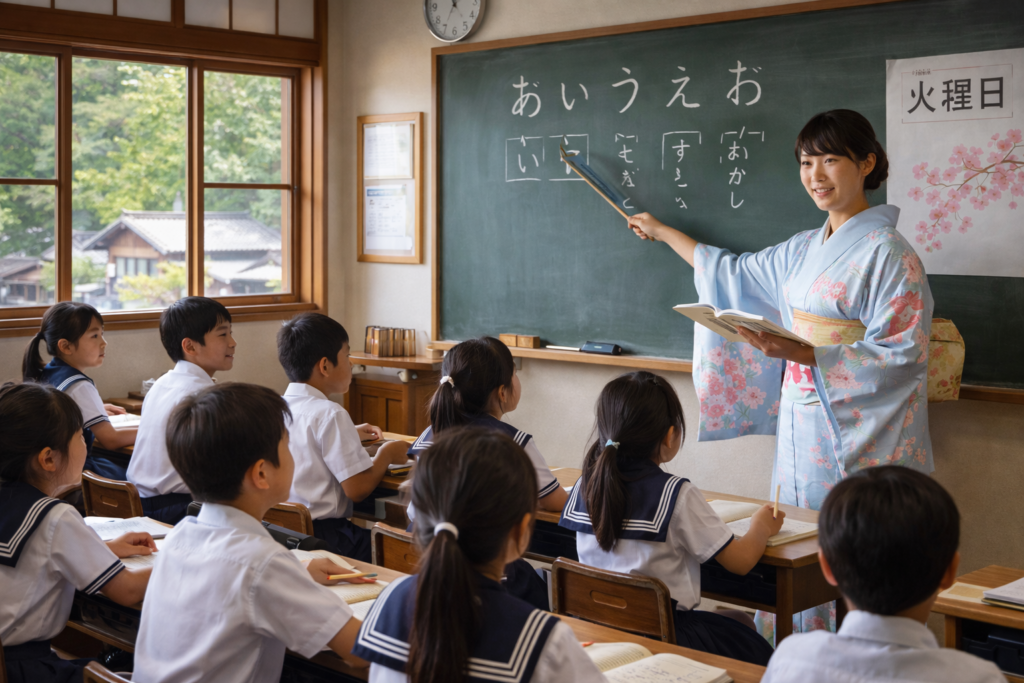
14. Regional Variations and the Diversity Within Japanese Naming Traditions
Japan is sometimes imagined from the outside as a culturally homogeneous country with a single unified naming tradition, but this picture is significantly oversimplified. Regional variation in Japanese culture) between the Kansai and Kanto regions, between the main islands and Okinawa, between old aristocratic families and working-class ones shows up in naming traditions in ways that a sophisticated Japanese name generator should ideally reflect.
Okinawa, which has its own distinct cultural and linguistic heritage that was maintained with considerable independence even after political incorporation into Japan, has naming traditions that differ noticeably from mainland Japanese conventions. Traditional Okinawan names often use different kanji combinations and follow different phonetic patterns from those common on the main islands.
Okinawan surnames like Shimabukuro), Oshiro), and Gushiken) are immediately recognizable as distinct from the landscape-reference surnames that dominate mainland Japan they have a different sound and cultural etymology. Characters with Okinawan heritage in fiction deserve Okinawan-appropriate names, and a Japanese name generator that acknowledges this regional diversity serves writers better than one that treats all Japanese names as culturally uniform.
Even within the main islands, historical regional differences in naming are visible. Osaka and Kyoto historically the center of merchant culture and imperial court culture respectively have different naming aesthetics from Tokyo, which was a center of samurai administration and later modern industrialization. Family names that reference flat agricultural land are more common in the plains regions; names referencing mountains and valleys cluster in the interior highlands. A character whose family comes from the Tohoku region of northern Japan carries a slightly different cultural heritage than one whose family has been in Osaka for generations and while a Japanese name generator) may not always be granular enough to reflect these differences, awareness of them enriches any creator’s use of the tool.
15. Getting the Most from a Japanese Name Generator: A Practical Creative Workflow
The most effective way to use a Japanese name generator is as a starting point for a creative process rather than as a source of final answers. The creators who extract the most value from these tools tend to follow a workflow that moves from broad generation through cultural evaluation to intentional refinement a process that takes the tool’s outputs seriously while insisting that the final naming decision always involves genuine creative judgment.
The first step is to generate a broad set of options across different gender presentations, historical periods, and stylistic registers. A batch of twenty to thirty names will almost always contain more useful material than a batch of five, because the variety reveals patterns which phonetic structures you are drawn to, which meanings resonate with the character you are building, which combinations feel tonally right for the setting. Pay attention to both the sound of names and the meanings of their kanji components, since both carry narrative information. Then narrow the field to three or four strong candidates and begin the refinement process: adjust a single kanji) character to shift a meaning; try a different suffix to alter the gender presentation slightly; consider whether the name sounds better in hiragana) than in kanji for this particular character.
The final step and the one that most casual users skip is to check the name against the full cast of characters in your project. Do all the names in your fictional Japan feel tonally consistent with each other? Do they represent an appropriate range of historical periods if the story spans generations? Are there unintentional phonetic similarities between names that might confuse readers? And most importantly: does each name feel like it belongs to a specific person not just a culturally accurate label, but a name that resonates with something true about the character who carries it? This last question is the one that separates competent naming from inspired naming, and it is the one that no Japanese name generator) can answer for you. As with discovering new creative worlds through an Island Name Generator), the tool opens the door the creative choice of what to do once you step through it belongs entirely to you.
Frequently Asked Questions
Q1: How does a Japanese name generator create authentic-sounding names?
A quality Japanese name generator) builds names by working within the phonological rules of the Japanese language specifically the limited set of consonant-vowel syllable units (called mora)) that make up all Japanese words. Valid Japanese syllables follow predictable patterns: most are a single consonant followed by one of the five vowels (ka, ki, ku, ke, ko; sa, si, su, se, so, and so on), with N as the only consonant that can stand alone. By combining these units in sequences that follow the rhythm and phonetic patterns of real Japanese names including common endings like -ro, -ki, -ko, -mi, -na and then associating those sequences with kanji whose meanings fit the generated name, a good generator produces outputs that are both phonetically valid and semantically grounded. The most sophisticated tools also learn from large databases of real Japanese names, allowing them to weight their outputs toward the most culturally common patterns rather than producing technically valid but practically unusual combinations.
Q2: What is the difference between male and female Japanese names?
Japanese male and female names are typically distinguished by characteristic endings and by the thematic content of their kanji, though the distinctions are less absolute than in some other languages. Masculine names more frequently end in -ro), -ki), -to), -hiko), and -suke), and often incorporate kanji associated with strength, direction, trees, and abstract virtues like truth and sincerity. Feminine names more frequently end in -ko), -mi), -ka), -na), and -e), and often incorporate kanji associated with beauty, flowers, seasons, and qualities like gentleness and brightness. Some names particularly shorter, nature-reference names like Aoi), Sora), and Nao) are used for both genders in contemporary Japan, reflecting a modern movement toward gender-neutral naming. A Japanese name generator) should ideally flag these ambiguous cases so users can make intentional choices.
Q3: Can I use Japanese names for non-Japanese characters in my fiction?
This is a nuanced question that touches on issues of cultural appropriation, narrative plausibility, and creative intention. The most defensible answer is: it depends on why the character has a Japanese name and how that fact is handled in the narrative. A non-Japanese character who grew up in Japan, who has a Japanese parent, or who adopted a Japanese name for specific story reasons is a plausible candidate for a name generated by a Japanese name generator). A non-Japanese character who has been given a Japanese name simply because it sounds exotic, without any cultural connection to Japan being established in the story, risks feeling like cultural decoration rather than genuine engagement. Writers are generally best served by letting the story context determine naming choices and by using a Japanese name generator) with enough cultural awareness to understand what a Japanese name implies about the character who carries it, not just how it sounds.
Q4: How should I handle Japanese name order in my writing?
The name order question whether to use the Japanese surname-first convention or the Western given-name-first convention has no single right answer, but there are clear principles to guide the decision. For fiction set in Japan and aimed at readers familiar with Japanese culture, maintaining the Japanese surname-first order is both culturally accurate and narratively immersive. For fiction aimed at general Western audiences where the cultural setting is Japanese-inspired rather than explicitly Japanese, using the Western order may improve readability while a note about the Japanese convention is provided. The most important rule is consistency) choose an order and apply it uniformly throughout the work, noting the choice if necessary so readers do not become confused. When using a Japanese name generator), be aware of which order the tool defaults to and adjust consistently throughout your project.
Q5: What kanji should I avoid when choosing a Japanese character name?
Certain kanji are avoided in real Japanese names for cultural, historical, or superstitious reasons, and writers aiming for cultural authenticity should be aware of them. Characters associated with death, disease, or bad fortune are generally avoided including kanji like shi) (death, 死), byo) (illness, 病), and hen) (strange/weird). Kanji associated with political events or historical tragedies may also be avoided in certain periods. Some kanji are officially restricted from use in Japanese personal names by the Ministry of Justice’s list of jinmeiyō kanji) (name-use kanji) only characters on this approved list can legally appear in officially registered Japanese names. A Japanese name generator) that draws from real Japanese naming databases will naturally avoid most of these problematic characters; a tool that simply generates kanji combinations without cultural filtering may produce names that would strike Japanese readers as bizarre or offensive.
Q6: How are Japanese place names related to personal names?
Japanese place names and personal names share deep structural and cultural connections. Many Japanese surnames) originated as place names families took the name of their village, rice field, mountain, or river as their family identifier when the Meiji government required surname adoption. Conversely, many Japanese place names use the same kanji and phonetic patterns found in personal names, creating a landscape where geography and personal identity are linguistically intertwined. The kanji for mountain (山, yama), river (川, kawa), field (野, no), forest (林, hayashi), and island (島, shima) appear in both place names and personal names with remarkable frequency. This interconnection means that a Japanese name generator) drawing from authentic naming databases will tend to produce names that feel geographically grounded names that seem to belong to a landscape as much as to a person.
Q7: Are there naming taboos or lucky names in Japanese tradition?
Yes Japanese naming tradition includes both explicit taboos and strongly held preferences about which names carry good or bad fortune. The practice of seimei handan) name fortune-telling based on the number of brushstrokes in the kanji of a name is widely consulted by parents in Japan, and many naming decisions are made or adjusted based on these calculations. Names with stroke counts considered unlucky are avoided; names with stroke counts associated with health, prosperity, and long life are preferred. This tradition has no scientific basis but has enormous cultural weight professional seimei handan) practitioners charge significant fees to analyze proposed names, and the practice is taken seriously even by otherwise secular families. Additionally, names that sound similar to negative words or concepts in Japanese are avoided for obvious reasons a practice similar to the international product naming due diligence that checks new brand names for unfortunate meanings in other languages. A well-researched Japanese name generator) acknowledges these cultural preferences even if it cannot replicate the full complexity of traditional name fortune-telling.
Conclusion: Names as the Gateway to Japanese Culture
Over the course of this guide, we have traveled a considerable distance from the simple act of typing a request into a Japanese name generator and reading the output. We have explored the two-thousand-year history of Japanese naming conventions, from the clan-based identity markers of the ancient Yamato court through the literary elegance of the Heian aristocracy and the martial directness of the samurai era to the diverse, globally influenced naming landscape of contemporary Japan. We have examined the structural logic of kanji), hiragana), and katakana as distinct scripts with different emotional registers; the semantic depth that comes from choosing specific character combinations rather than merely sounds; the social meaning encoded in honorifics like -san), -kun), and -chan); and the regional variations that make Japanese culture far more internally diverse than its external image sometimes suggests.
What emerges from all of this is a truth that applies far beyond Japanese names specifically: naming is a cultural act, and doing it well requires cultural knowledge. A Japanese name generator) that is built on genuine linguistic and cultural understanding that draws from real naming databases, provides kanji meaning breakdowns, respects historical period conventions, and acknowledges social context is a fundamentally different tool from one that simply generates pleasant-sounding syllable combinations loosely associated with Japan. The difference between these two kinds of tools is the difference between a name that a Japanese reader would recognize as plausible and a name that they would immediately identify as the product of outside imagination applied to a culture it does not fully understand.
For writers, this matters because cultural authenticity is a form of respect and because readers, including Japanese readers, notice the difference. A character named with genuine care for the meaning and cultural register of their Japanese name is a character who feels fully inhabited, whose name tells you something true about them before a single line of dialogue is written. A character whose Japanese name was chosen purely for its exotic sound is, at some level, a character dressed in a costume. The Japanese name generator) is powerful precisely because it makes the first kind of naming accessible even to writers without deep linguistic training but it only delivers that power when it is used with genuine curiosity about what names mean, not just how they sound.
The Japanese naming tradition, in its full richness, is an invitation to see language as an art form to understand that the characters chosen to write a name are not just phonetic transcriptions but semantic choices, aesthetic choices, cultural choices, and ultimately expressions of love and hope for the person who will carry that name through their life. A Japanese name generator at its best is a tool that honors this tradition by making it accessible and legible to anyone curious enough to explore it. Whether you are writing a novel set in Edo-period Japan, building a tabletop campaign in a world of cherry blossoms and hidden swords, designing a character for a video game, or simply wondering what your own name might sound and look like in Japanese the tradition is rich, the tools are better than ever, and the names waiting to be discovered are worth every moment spent learning what they mean.
Published for beastskins.com Creative tools for every world you imagine.